Korean stock-linked perpetual futures have reached 307 trillion KRW in trading volume, highlighting a significant shift towards offshore markets.
Offshore Trading in Korean Stocks Surges
The trading of Korean stocks has witnessed a notable transformation with the emergence of offshore perpetual futures. These financial products have rapidly gained traction, amassing an impressive 307 trillion KRW in trading volume over a few months. This trend underscores a significant shift as liquidity moves away from domestic exchanges, reshaping the financial landscape for both local and international investors.
Perpetual Futures Reshape Trading Dynamics
Perpetual futures, which allow investors to speculatively engage with asset price movements without needing ownership, are at the heart of this shift. Unlike traditional futures contracts, they lack expiration dates and delivery requirements, making them quite attractive for traders looking to capitalize on immediate market fluctuations. As traditional crypto exchanges pivot towards integrating such products linked to stocks and commodities, they are successfully tapping into offshore markets.
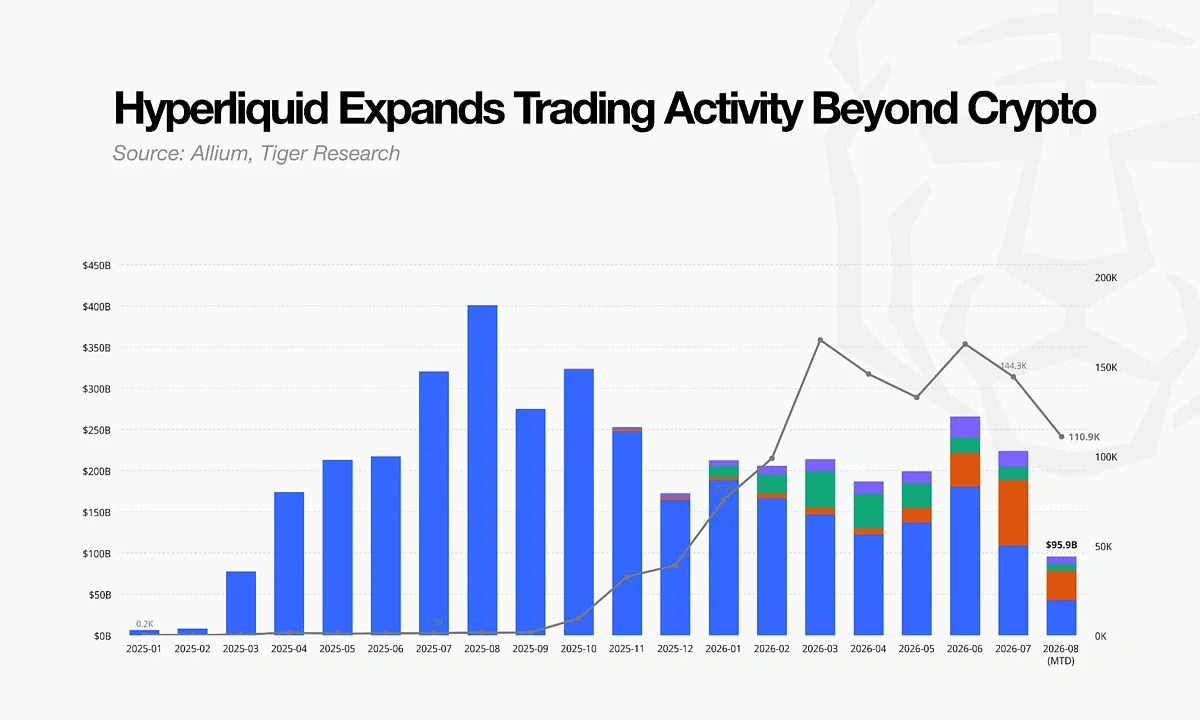
This infrastructure allows exchanges to diversify their offerings quickly. For instance, platforms like Hyperliquid have significantly increased their share of trading in these traditional asset-linked products. As expectations around perpetual futures grow, it's clear that the financial ecosystem is evolving beyond mere digital assets.
Korean Stocks: From Domestic to Offshore
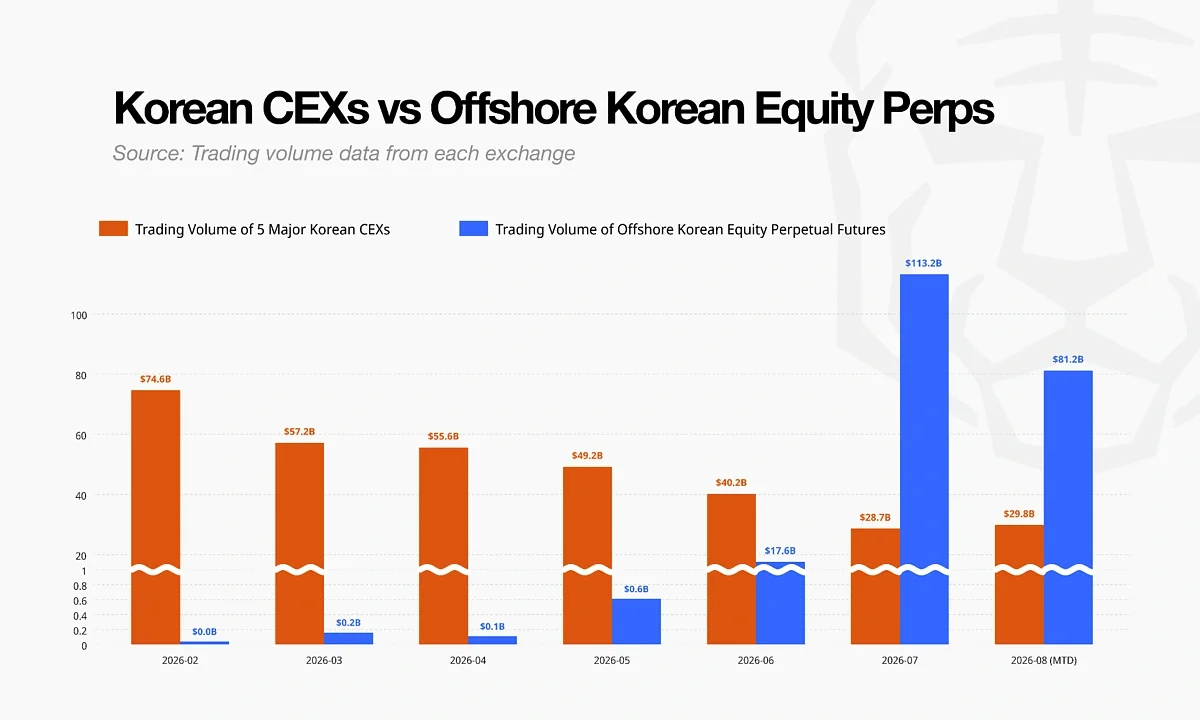
Korea plays a pivotal role in this surge, with numerous offshore exchanges now actively facilitating trading in perpetual futures tied to major local companies, including tech giants like Samsung Electronics and SK hynix. This offshore environment provides opportunities for investors to trade these stocks during off-hours, offering high leverage options. The cumulative trading volume hit approximately 307 trillion KRW between February and August 2026, with August alone contributing nearly 166 trillion KRW—significantly outpacing the trading volume observed in Korea’s major domestic exchanges.
This stark contrast in trading volumes becomes even more pronounced when peers like the KORU ETF are evaluated. The perpetual futures associated with the KORU fund garnered about USD 24.1 billion in trading volume in August, dwarfing the ETF's USD 8.9 billion. Such developments indicate that offshore derivatives could become central to price discovery, potentially reshaping how these financial instruments interact with the stock market.
The Growing Influence of Offshore Markets
The dynamics of liquidity are also shifting, with perpetual futures transcending mere extensions of traditional trading hours. This offshore market is significant not only for Korean stocks but also in broader markets like Japan and China. The ability to trade perpetual futures on a range of assets—including those tied to private companies—reflects an ongoing blurring of established trading boundaries.
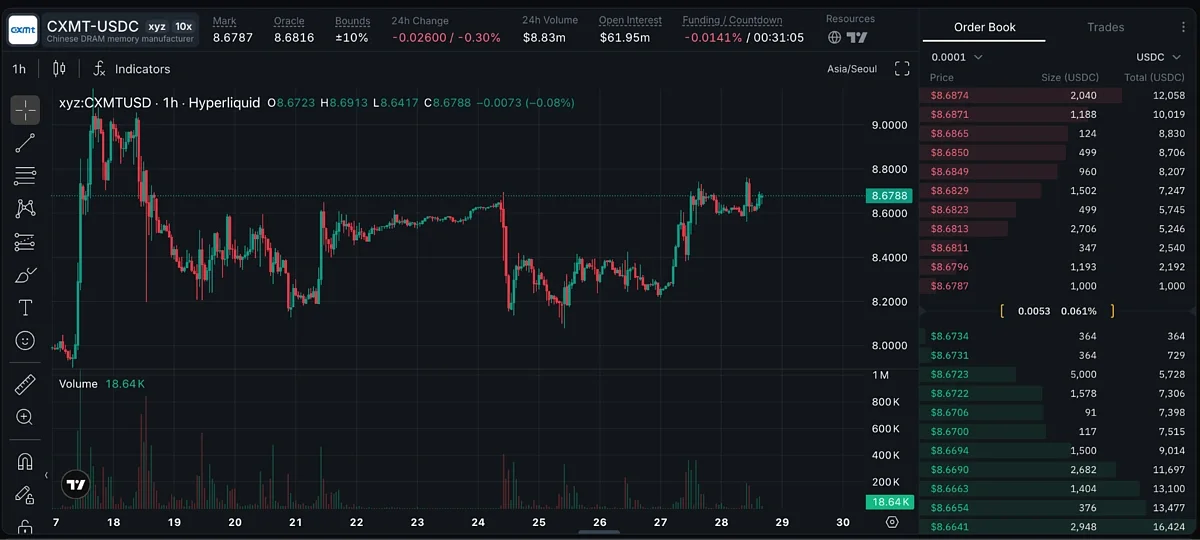
Moreover, the active participation of sophisticated market players, including institutional investors and Wall Street traders, signals a shift in who is engaging with these products. Trading platforms that once catered primarily to cryptocurrency enthusiasts are now attracting a broader audience of capital managers seeking simultaneous market access beyond conventional hours.
Adapting to the New Market Environment
While Korea’s regulatory environment currently restricts domestic traders' participation in these offshore products, this cannot fully stymie their growth. Global exchanges may impose limitations, yet they cannot prevent the market's expansion through foreign investors. Korean regulators must consider leveraging these developments to enhance their financial ecosystem rather than resisting the momentum.
There’s a clear need for Korea to embrace the transformation towards offshore markets. This includes establishing a formal framework for derivatives and ensuring corporate access to leverage the market fully. By integrating KRW stablecoins and refining payment and settlement systems, Korea can enhance liquidity, driving connection between domestic markets and global capital.

Korea’s crypto exchanges possess a unique advantage, built from extensive 24/7 operations in digital assets. They can utilize this foundation for venturing into traditional stock-linked perpetual futures. The country's financial landscape must evolve to accommodate these changes holistically rather than piecemeal. This interconnected approach can help capitalize on emerging trends while ensuring Korea's active participation in the burgeoning offshore financial arena.
As we observe this transition, the current trading volume of 307 trillion KRW in Korean perpetual futures is not indicative of a fully matured market. Instead, it reflects a nascent stage ripe for potential growth. If broader access and institutional involvement are achieved, we might witness further waves of liquidity dynamics that redefine market engagement across borders.
As this market evolves, stakeholders within Korea's financial framework must adapt swiftly to maintain relevance amidst the growing offshore opportunities. The path forward should focus not on curtailing this financial evolution but rather on strategically embedding Korea within this changing landscape.
Discussion
Sign in to join the discussion.