Crypto’s market value fell 1.44% after U.S. inflation exceeded expectations, while most traders still expected the Fed to hold rates steady.

Inflation shock jolts a recovering crypto market
A hotter-than-forecast U.S. inflation reading coincided with a $42 billion drop in crypto’s total market value on October 14, 2026. The decline interrupted weeks of choppy trading that had followed a three-month rebound, putting renewed attention on the economic forces that can unsettle digital assets. The timing points to a familiar market sensitivity: when inflation threatens to keep interest rates elevated, investors may reassess exposure to assets whose prices can swing sharply.
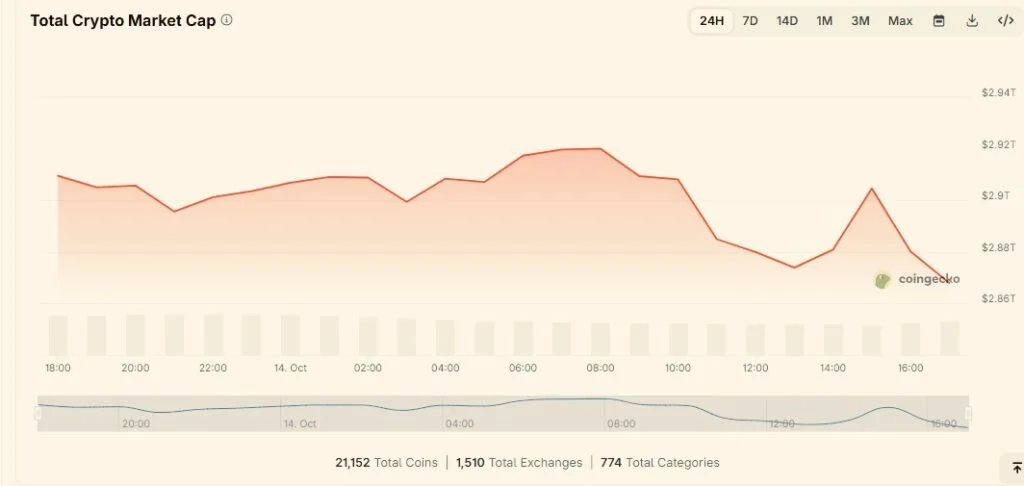
Data from CoinGecko analyzed by Finbold put the market’s capitalization at $2.868 trillion, down from $2.91 trillion. That’s a decline of about 1.44%. The absolute loss sounds large because the market is large; the percentage change gives a clearer sense of the day’s move. Still, a marketwide fall of that size is a reminder that a broad rally doesn’t remove the risk of abrupt pullbacks.
Bitcoin (BTC) led the pullback among major tokens, trading near $81,861 after losing 2% over 24 hours at the time of writing. That decline was smaller than the losses recorded by several other large assets, but Bitcoin’s size means its movement can shape the headline picture of the market. A single day’s price action can’t establish whether the rebound has ended; it does show that buyers had little protection from a shift in macroeconomic expectations.
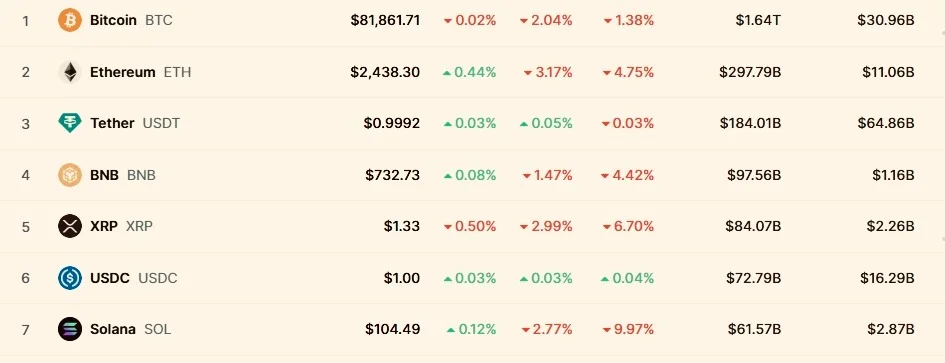
Ethereum (ETH) fell 3.17%, while XRP dropped 2.99% and Solana (SOL) lost 2.77%. The wider losses among these tokens suggest the pressure wasn’t limited to Bitcoin. When several major assets fall together, the move can reflect a shared change in risk appetite, though the figures alone don’t show what each investor was doing or why.
Inflation shifts rate expectations
The market decline followed U.S. inflation data that came in above expectations. The Bureau of Labor Statistics reported underlying Consumer Price Index (CPI) inflation of 0.3%, against a 0.2% forecast, according to Forex Factory. The difference was one tenth of a percentage point, but markets often respond to whether a reading surprises in either direction. A hotter figure can complicate the case for easing monetary policy because it suggests price pressures may be proving persistent.

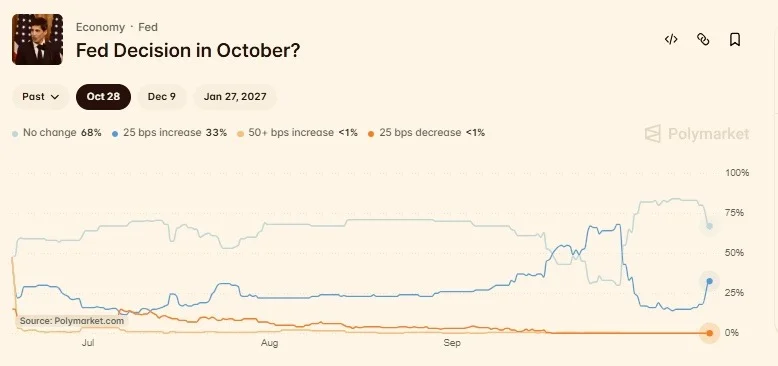
On Polymarket, the implied chance of a 25-basis-point Federal Reserve rate increase climbed to 33%, based on figures analyzed by Finbold. Traders still put the odds of no change at 68% at publication time. Those estimates describe market expectations, not a decision by the Fed, and they leave room for a range of outcomes. Here’s the thing: a shift in perceived rate risk can affect crypto prices before policymakers make any move, as traders adjust to the possibility of tighter financial conditions.
U.S. CPI inflation has remained above the Fed’s 2% target for 67 consecutive months. That longer-running gap helps explain why one monthly reading can carry added weight: investors are watching for evidence that inflation is moving sustainably toward the target, or that progress is stalling. It doesn’t mean every above-forecast figure will trigger a crypto sell-off. But it gives traders a reason to treat inflation releases as relevant signals for the path of rates.
For assets that can rise or fall quickly, interest-rate expectations matter partly because they shape how investors compare risk across markets. Higher expected rates can make cash and other interest-bearing options more appealing relative to assets that don’t provide a yield. That relationship isn’t automatic, and the source data doesn’t establish that the CPI surprise caused every sale. The timing is consistent with macro concerns weighing on prices; it isn’t proof of a single cause.
Analyst sentiment remains bullish
The latest decline comes as institutional investors, including Citigroup Inc. (NYSE: C), have signaled a bullish outlook for Bitcoin amid recent market consolidation. That view and the day’s price action can coexist: a positive longer-term thesis doesn’t prevent short-term losses when economic data shifts expectations. The article’s reference to institutional optimism provides context, but it doesn’t establish that institutions broadly share one position or that their outlook will determine near-term prices.
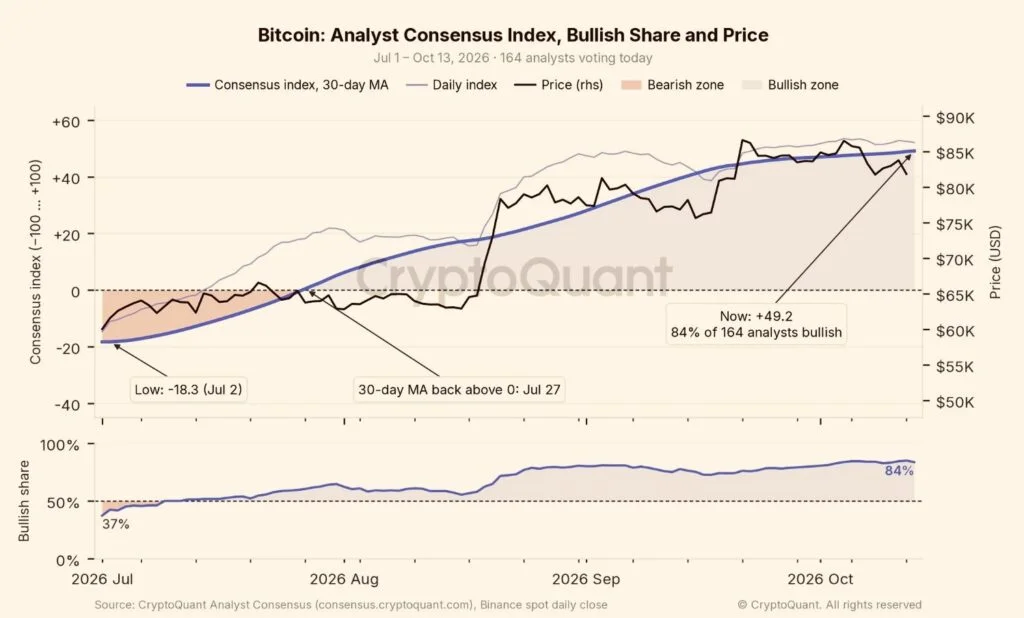
CryptoQuant reported that 84% of 164 analysts are bullish on Bitcoin, up from 37% in July, according to its latest update. That optimism contrasts with the immediate pressure from inflation and rate uncertainty. The figures capture a survey of analyst sentiment, not a guarantee of price direction, and bullish views can change as new information arrives. The jump from July suggests a marked shift in the group’s outlook, but it doesn’t tell readers how those analysts weigh the latest inflation data.
The numbers here are underwhelming as evidence of resilience: market value fell, major tokens declined, and uncertainty around rates remained in focus, even while analyst sentiment was positive. (And this is the part most people overlook: sentiment measures what analysts expect, while prices reflect the actions of buyers and sellers.) If you’re working in this space, the useful signal is the tension between those two measures, not a promise that one will soon overpower the other.
What the pullback means for the outlook
One session doesn’t settle the direction of a market that had already been trading unevenly after a three-month rebound. The decline is significant enough to show that crypto remains sensitive to changes in the rate outlook, yet its scale alone can’t establish whether investors are abandoning the recovery. What comes next will depend in part on how markets interpret further inflation information and what they expect from the Federal Reserve. No outcome is established by the figures cited here.
That said, the episode offers a practical reminder for readers tracking digital assets: macroeconomic headlines can affect the whole market, while individual tokens may move by different amounts. Bitcoin’s 2% fall was less than Ethereum’s 3.17% decline, but all four named assets lost ground. Short-term correlations can tighten when investors react to the same news, even if each asset has its own market dynamics. For now, a rebound and a sharp daily drop sit in the same account of events. Both matter. The next data point will have to do more than confirm that volatility is still present.
Featured image via Shutterstock
The post Crypto market wipes out over $42 billion amid sticky U.S. inflation appeared first on Finbold.



Discussion
Sign in to join the discussion.