If the CLARITY Act fails to pass, the DeFi and stablecoin sectors could experience significant growth, reshaping the cryptocurrency landscape.

As U.S. Senator Cynthia Lummis rallies support for the CLARITY Act, a proposed legislative framework aimed at clarifying rules for the cryptocurrency sector, the stakes are particularly high. With over a trillion dollars in traditional bank deposits at risk, Lummis emphasizes the urgency in securing the bill's passage before potential delays until 2030.
Significance of the CLARITY Act
The CLARITY Act isn't just another piece of legislation; it's a pivotal effort to define and regulate how cryptocurrencies operate within the financial system. With rapid developments in the crypto space, uncertainty about regulatory frameworks like this bill can stymie innovation and deter investments. Lummis's initiative seeks to cement a solid foundation for digital currencies and related industries, allowing them to thrive under clear legal guidelines. The absence of such regulatory clarity could push innovation offshore, placing U.S.-based firms at a disadvantage.
Lummis expressed concern that without action from the current administration, the opportunity to implement necessary market structure regulations may be lost for years. In a recent statement she shared on social media, she warned:
“If the Clarity Act doesn’t pass this Congress, the next real opportunity to bring market structure legislation back up is 2030. That’s years of jobs, investment, and tax revenue we can avoid squandering if we finish this now,” Lummis noted in an X post on September 7.
This makes the stakes exceedingly high—passage isn't just about clarifying rules; it’s about preserving the United States' position in a competitive global market where countries are quickly establishing their own crypto regulations. If Congress fails to act, it risks delaying essential regulations vital for the growth and stability of the crypto sector, with potentially significant economic repercussions.
Potential Crypto Sectors for Rapid Growth
The CLARITY Act has garnered considerable backing, particularly as data indicates that allowing Decentralized Finance (DeFi) protocols to offer interest on stablecoin holdings could have drastic implications. According to findings from the ICBA, this practice might divert up to $850 billion in community bank lending.
The figure points to a striking reality: as consumers turn toward DeFi for better interest rates, traditional banks may find themselves struggling to retain deposits. Community banks, already operating on thin margins, could experience a funding crunch. If you’re paying attention, you'll see that community banking could undergo major shifts—leading to reduced loan availability for all but the most stable clients.
This analysis pointed to a projected $1.3 trillion outflow from community banks to DeFi platforms that can offer superior terms to consumers. Currently, the DeFi ecosystem boasts a total value locked (TVL) of approximately $88.172 billion, while the stablecoin market capitalization reaches about $305.607 billion, according to DeFiLlama.
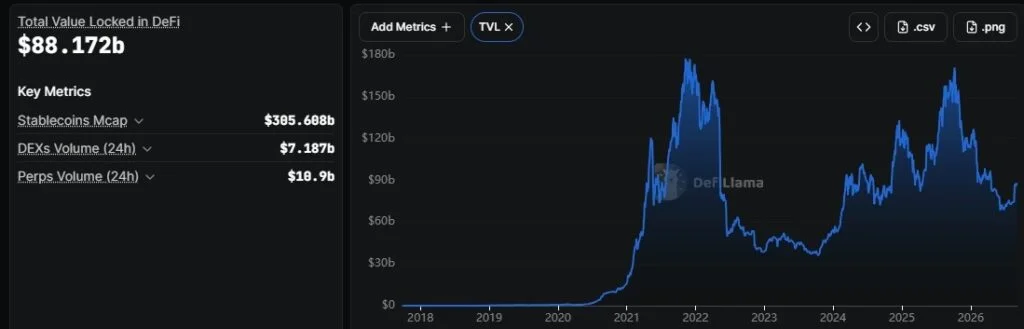
With traditional banks offering an average annual percentage yield (APY) of just 0.38%, DeFi protocols are setting the standard by providing yields between 4% and 8% on stablecoins through decentralized lending mechanisms. The gap in returns makes it difficult for banks to compete. This disparity underlines how rapidly the financial ecosystem is shifting. Traditional financial institutions may have to rethink their models entirely.
The U.S. Treasury has predicted that stablecoins could accumulate trillions in market cap by 2030. The potential ramifications of a stalled CLARITY Act become even more significant for the DeFi and cryptocurrency sectors when you consider that regulatory clarity could bolster mainstream adoption, creating a stable environment for investors and firms alike.
Current Odds of the CLARITY Act Being Passed
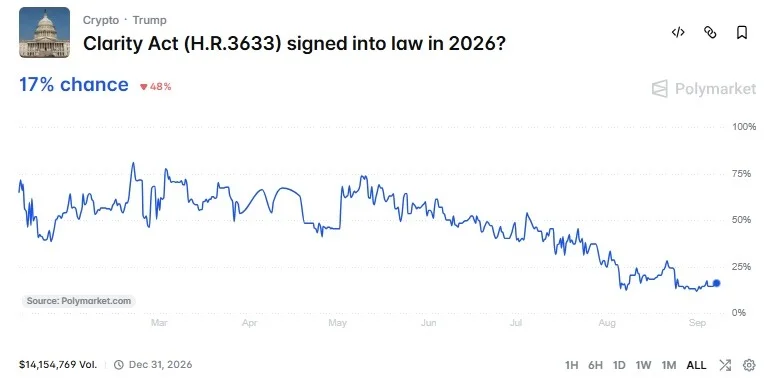
As of now, the chances of the CLARITY Act being enacted in 2026 stand at around 17%, according to Polymarket, an online prediction market. Investors are closely monitoring this scenario, especially as the U.S. Senate prepares for a vote next week, which could inject volatility into this prediction market.
The estimated probability might seem low at first glance, but the political winds can shift unpredictably. As we’ve seen in the past, both public opinion and lobbying efforts can rapidly change the landscape. Major players in the tech industry might step up their advocacy if they believe their interests are threatened—meaning those odds could improve, or worse, fall further, depending on how stakeholders respond.
Featured image via Shutterstock
Implications and Future Outlook
The outcome of the CLARITY Act could set precedents that influence cryptocurrency and financial innovation in the U.S. for the foreseeable future. Given that so much investment and innovation hinges on clear rules, failure to pass the Act would likely lead to a stifling environment. Companies and investors may pivot to friendlier jurisdictions, weakening the U.S.'s competitive edge in tech innovation.
(and this is the part most people overlook) There’s room for an entirely new financial ecosystem to develop here. If Lummis' bill passes, the U.S. could actually become a hub for trusted crypto practices, leading to increased transparency and security in an industry often plagued by controversy. If that happens, other countries might look to the U.S. as a model for how to operationalize crypto regulations—reverse leadership in an area where the U.S. has historically been a frontrunner.
What this means for you, whether you’re an investor, developer, or small business owner, is that the CLARITY Act represents not just regulatory reform but potential economic opportunity. A regulated crypto market could lead to expanded access to capital, new employment opportunities, and potentially even increased protection for consumers.
Finally, don’t lose sight of the fact that economic conditions can vary widely. Regulation can either be a catalyst or a barrier, depending on how it's implemented. The debate surrounding the CLARITY Act encapsulates the delicate balance legislators need to strike—encouraging innovation while ensuring consumer protection. In this high-stakes game, the future isn't just uncertain; it's crucially important.
The post If CLARITY Act fails before 2030, these 2 crypto sectors could explode appeared first on Finbold.



Discussion
Sign in to join the discussion.