Bitcoin initiated its latest bull cycle in August 2026, averaging a 130.5% gain across previous cycles, but future returns may be less dramatic.
New Bull Cycle Begun
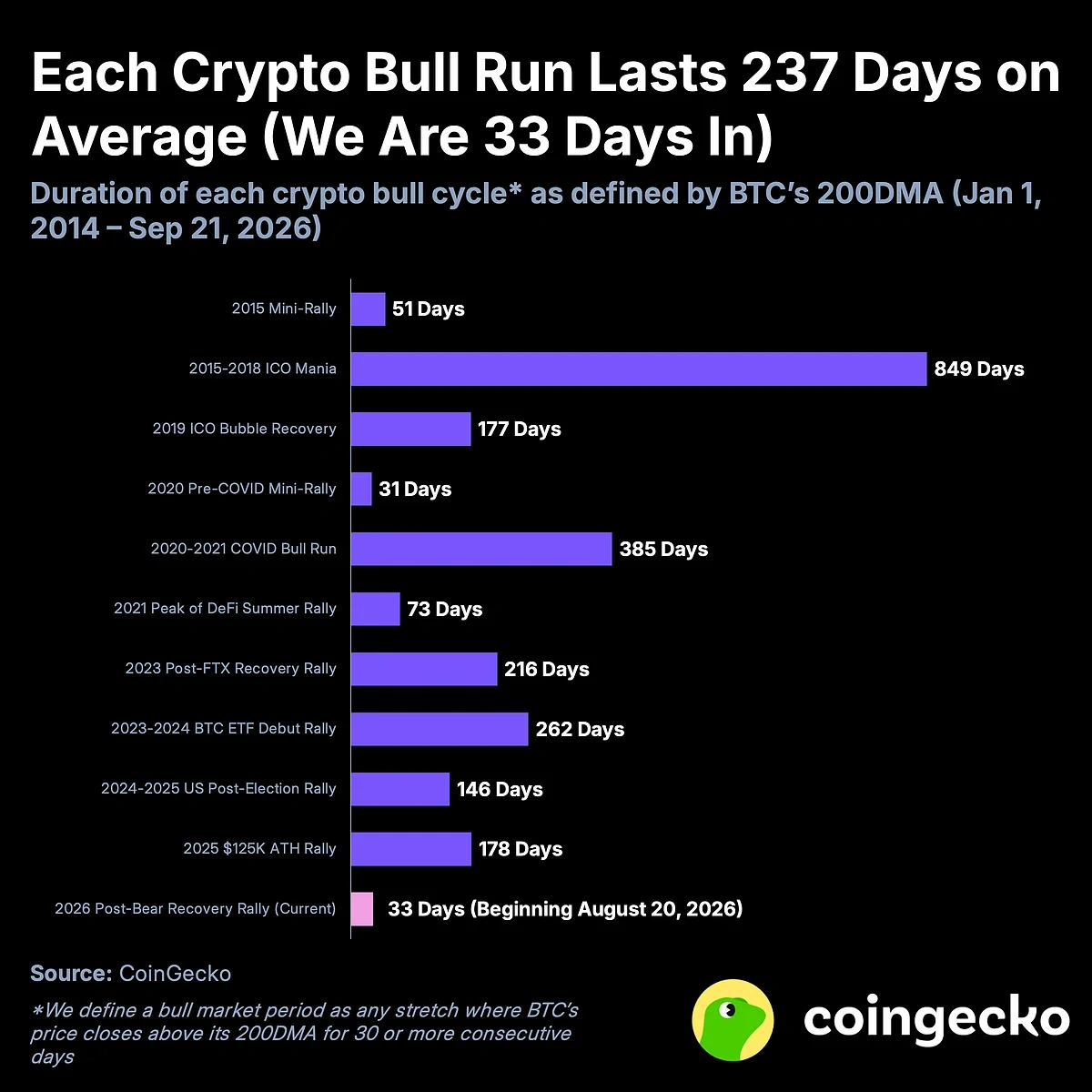
As of August 20, 2026, Bitcoin has entered a new bull cycle, following a 290-day bear phase. This transition into a bull market is significant when you look at Bitcoin's historical performance metrics. Bull markets typically last around 237 days based on the ten previous bull cycles recorded since 2014. However, this average incorporates a wide range of cycle lengths — from a brief 31 days during the 2020 Pre-COVID Mini-Rally to a lengthy 849-day run witnessed during the 2015-2018 ICO and Halving Cycle. The latter’s prolonged duration heavily skews the average, raising questions about its influence on the current cycle's expectations and investor sentiment.
Looking deeper, if we exclude this outlier, the average length of the remaining nine bull cycles drops to a more typical 169 days. This suggests that while the current cycle may be viewed through the lens of inflated averages, future market movements might revert to patterns more reflective of traditional trading principles. Investors should stay wary — bursts of euphoria often precede corrections. The financial wisdom here suggests that if you're relying on average durations for predictions, you might be setting yourself up for disappointment.
Performance Metrics of Previous Bull Cycles
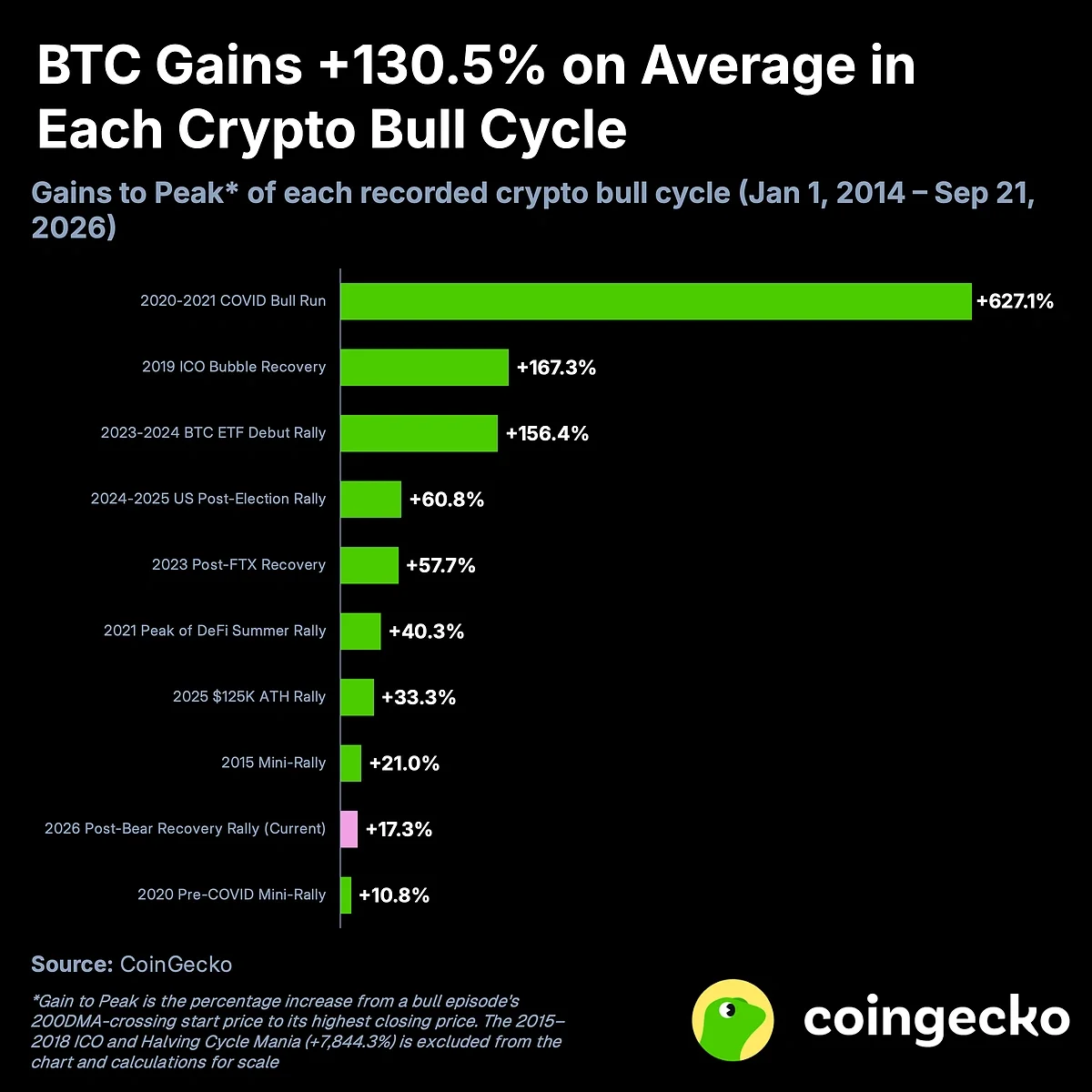
When reviewing Bitcoin's bull markets, the performance metrics tell a compelling story. Historically, Bitcoin bull markets have averaged gains of about 130.5% from start to peak across all completed cycles since 2014. The standout exception is the 2015-2018 cycle, which saw an astonishing gain of 7,844.3%. In stark contrast, the lowest recorded gain occurred during the 2020 Pre-COVID Mini-Rally, managing only a modest 10.8% increase. Then there's the 2020-2021 COVID Bull Run, which captured attention with its eye-popping 627.1% increase. Such variance highlights the unpredictable nature of Bitcoin's price movements.
Given historical trends, if Bitcoin were to follow the standard trajectory with a 130.5% increase from its entry point in August 2026 at $69,255, projections could place Bitcoin's peak around $159,634 by the end of this cycle. However, these optimistic predictions should be taken with a grain of salt; the growth rates observed in cycles post-2022 indicate significant compression. With the recent bullish momentum observed during the 2023 Post-FTX Recovery only yielding a 57.7% increase, signs suggest that future bull runs may be less pronounced. This shift can largely be attributed to the rising market capitalization and intensified institutional participation, both of which can dampen the explosive nature of rallies.
This compression of gains raises questions: what's changed in the investor psyche? The soaring investment from institutional players has tempered the wild volatility we’ve come to associate with Bitcoin, leading to a more cautious market environment.
Moreover, the extraordinary gains from the prior 2015-2018 cycle are noteworthy. These aren't factored into average calculations because of their unique nature, which skews analytical clarity. Adding to this complexity, the current cycle—dubbed the 2026 Post-Bear Recovery Rally—has shown a mere 17.3% increase as of September 21, 2026. Until this cycle is completed, it won't factor into calculative averages. Thus, while the numbers may paint a rosy picture, the underlying dynamics are less straightforward and warrant closer examination.
Historical Bull Runs at a Glance
|
Rank (by Gain) |
Bull Market |
Start Date |
End Date |
Duration (Days) |
Gain to Peak |
|
1 |
2015-2018 ICO and Halving Cycle Mania* |
2015-10-11 |
2018-02-05 |
849 |
+7,844.3% |
|
2 |
2020-2021 COVID Bull Run |
2020-04-30 |
2021-05-19 |
385 |
+627.1% |
|
3 |
2019 ICO Bubble Recovery |
2019-04-03 |
2019-09-26 |
177 |
+167.3% |
|
4 |
2023-2024 BTC ETF Debut Rally |
2023-10-17 |
2024-07-04 |
262 |
+156.4% |
|
5 |
2024-2025 US Post-Election Rally |
2024-10-15 |
2025-03-09 |
146 |
+60.8% |
|
6 |
2023 Post-FTX Recovery Rally |
2023-01-14 |
2023-08-17 |
216 |
+57.7% |
|
7 |
2021 Peak of DeFi Summer Rally |
2021-10-02 |
2021-12-13 |
73 |
+40.3% |
|
8 |
2025 $125K ATH Rally |
2025-04-23 |
2025-10-17 |
178 |
+33.3% |
|
9 |
2015 Mini-Rally |
2015-06-29 |
2015-08-18 |
51 |
+21.0% |
|
10 |
2026 Post-Bear Recovery Rally (Current)** |
2026-08-20 |
Ongoing |
33+ |
+17.3% |
|
11 |
2020 Pre-COVID Mini-Rally |
2020-01-29 |
2020-02-28 |
31 |
+10.8% |
*Excluded from average gain calculations due to its scale. **Current cycle is incomplete and not included in average calculations. Data is accurate as of September 21, 2026.
Analysis Methodology
Data for Bitcoin's daily closing prices was sourced from CoinGecko, covering the period from January 1, 2014, to September 21, 2026. Identifying a bull market hinges on Bitcoin's closing price remaining above its 200-day moving average for at least 30 consecutive days. Gains are calculated as the percentage increase from the start of a bull cycle to its peak during the same timeframe. To ensure analytical clarity, the analysis deliberately excludes significant anomalies like the 2015-2018 ICO and Halving Cycle.
The methodology is essential for understanding underlying performance trends without being misled by one-off phenomena. This content serves as an informational resource and shouldn’t be interpreted as financial advice.
Future Outlook for Bitcoin’s Bull Markets
So where does all this leave us? If you're working in this space, the implications of these analyses could be significant. Future cycles may not only be shorter but also follow less volatile trajectories, changing how investors engage with this asset. The increasing institutional involvement is shifting market dynamics and could rather obfuscate the once readily apparent 'boom and bust' characteristics that defined Bitcoin trading.
Moreover, with the current bull cycle still unfolding, market participants must remain agile and discerning. Bear in mind that the projected peak of Bitcoin may not have the explosive gains witnessed in past cycles. This is more significant than it looks. The trend may indicate a maturation of the market and could lead to sustained bouts of accumulation rather than breathless speculation. And yet, the allure of massive returns is likely to continue to attract attention. As a new breed of investors enters — institutional players and retail alike — understanding past performance might serve as a roadmap for navigating future cycles.
In the end, while the data provides insights, Bitcoin remains as unpredictable as ever. Keeping an eye on macroeconomic trends, regulatory developments, and broader market sentiment is crucial for anyone looking to engage with this cryptocurrency.


Discussion
Sign in to join the discussion.