Sentora's governance proposal aims to launch independent lending markets on Aave V4, sharing half of the revenue with the Aave DAO while excluding major stablecoins.
Overview:
- Sentora has submitted a governance proposal to create independent lending markets on Aave V4, offering 50% of revenue to the Aave DAO with no operational costs to the community treasury.
- The deployment on Ethereum includes a dedicated Hub capped at 100 million RLUSD for deposits and 90 million RLUSD for borrowing.
- Initial assets for borrowing will be limited to RLUSD, PYUSD, and OUSD, explicitly excluding USDC and USDT with a minimum reserve factor of 20%.
Sentora's Ambitious Proposal for Aave V4
Sentora is setting its sights on Aave V4 with a formal governance proposal designed to launch independently-curated lending marketplaces within the Ethereum network. The ambition is to funnel 50% of generated revenue to the Aave DAO.
This proposal has been posted on Aave's governance forum as an Aave Request for Final Comments (ARFC). Following community feedback, a favorable response will lead to a binding Snapshot vote and subsequent formulation of an Aave Improvement Proposal (AIP) for execution on-chain. This phased approach not only allows the community to weigh in but also aims to establish a sense of shared ownership of the project.
Sentora emerged from the merger of IntoTheBlock and Trident Digital, and this initiative aims to unify various institutional liquidity strategies that are currently dispersed across different decentralized platforms. By creating a consolidated framework, Sentora may bring a more organized structure to an often fragmented market.
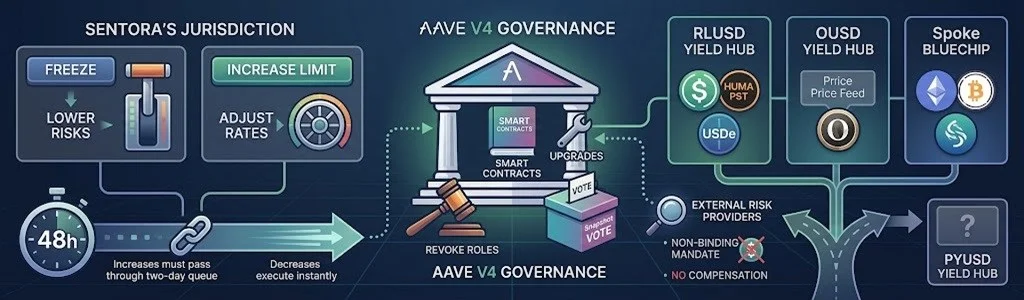
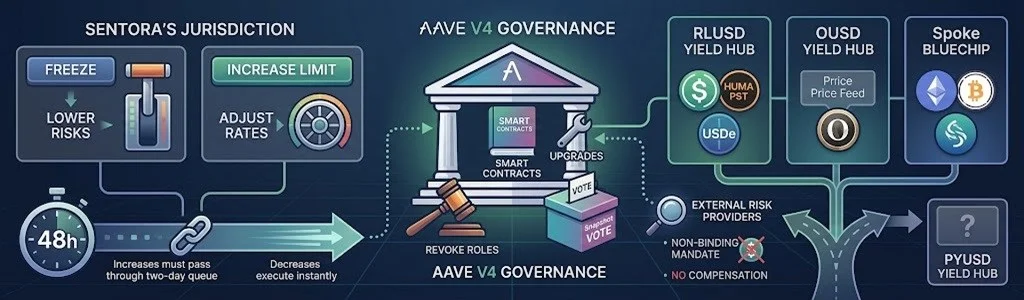
Under this setup, Sentora will manage aspects such as collateral selection, borrowing limits, interest rates, liquidations, and price oracle integrations. However, Aave's main governance will retain ownership of the underlying smart contracts and the definitive say on structural upgrades. This dual governance approach could serve as a necessary check on Sentora's administration, ensuring that overarching principles of Aave are upheld.
It’s critical to mention that the DAO's regular risk service providers will not have a contractual obligation to supervise these newly proposed markets. Unlike previous deployments made in March, this Hub will operate independently without connections to other Aave liquidity pools. This creates both opportunities and challenges; while independence could foster innovation, it also introduces a significant risk factor regarding oversight.
Risk Management and Hub Specifications
Risk mitigation strategies such as modifying collateral requirements or freezing markets can be promptly enacted. Nevertheless, adjustments to supply caps or interest model changes will necessitate a 48-hour on-chain timelock. This kind of timelock is typical in decentralized finance, imposing cooling-off periods to avoid rash decisions that could destabilize markets.
This timelock system does not limit the extent of parameter enhancements, nor does it enforce necessary cooling-off periods between modifications. If disputes arise, the DAO lacks the capacity to retract individual transactions; corrective measures would require passing an AIP to revoke Sentora’s administrative powers. Essentially, governance structure here is designed for transparency but could face challenges in real-time accountability.
Introducing new collateral will mandate a two-week discussion period within the governance forum. Any technical concerns from recognized Aave service providers will obstruct advancement, relegating the decision to a binding Snapshot vote. However, external auditors will not receive compensation for their evaluations, meaning the lack of public dissent does not guarantee thorough technical scrutiny. And this is the part most people overlook: just because there are checks in place doesn't mean they're being executed effectively.
This initial phase will completely exclude major stablecoins like USDT and USDC. The borrowing and lending activities will involve RLUSD, PYUSD, and OUSD, beginning with the RLUSD Yield, OUSD Yield, and a Bluechip Spoke, while a future inclusion of PYUSD Yield is planned. This selective approach to asset inclusion signals a cautious strategy aimed at minimizing exposure to volatility.
The RLUSD Yield module boasts a deposit cap of 100 million tokens and maximum borrowing capacity of 90 million. Initial collateral assets will comprise USDe and Huma PST, with further plans to encompass PRIME and mWIN. By limiting available collateral, Sentora intends to maintain tighter control over liquidity and market conditions.
Stablecoins available for borrowing will have a minimum reserve factor of 20% on accrued interest, a threshold that Sentora can increase but not decrease. The 50% share of protocol revenue will go directly to the Aave DAO treasury and will not provide direct distributions to AAVE token holders or stakers. Final confirmations regarding the price oracle setup for OUSD remain the primary technical milestone before the Snapshot vote commences. This lack of direct benefits for AAVE token holders might raise eyebrows, as backers often expect revenue-sharing models to contribute to their holdings.
Implications of Sentora's Proposal
What this means for you in the industry is significant. Sentora's proposal could reshape how decentralized lending operates on Aave and beyond. Should it succeed, this model might inspire more independent financial ecosystems within the broader DeFi space. If done well, it could serve as a blueprint for other projects looking to marry centralized governance with decentralized execution. But if it falters, the repercussions could sour community sentiment toward governance experiments.
This venture emphasizes the delicate balance between autonomy and accountability in decentralized finance. On one hand, granting Sentora control can foster quick responsiveness in a fast-paced market. On the other, it risks sidelining key oversight mechanisms that are typically considered best practices in financial systems. The stakes are high, and the community's response to this proposal will likely dictate future governance frameworks.

Discussion
Sign in to join the discussion.