Tesla's remaining Bitcoin, valued near $1 billion, hasn't moved since 2022. What lies ahead for Elon Musk's crypto strategy remains uncertain.
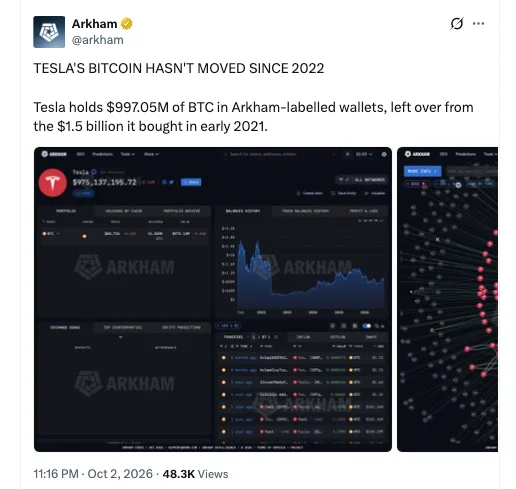
Back in 2021, Tesla entered the Bitcoin arena with a substantial investment of $1.5 billion, acquiring approximately 48,000 BTC. Fast forward to today, and the on-chain analysis firm Arkham recently revealed that about 11,509 BTC remains untouched in Tesla's wallets, valuing the stash at around $997 million based on current market prices.
Tesla's Evolving Stance on Crypto
Tesla's initial Bitcoin acquisition sparked significant discussions around cryptocurrency, especially at a time when institutional interest was still developing and ETFs had yet to appear. This was a pivotal moment when many saw Bitcoin and other cryptocurrencies as mere speculative assets rather than legitimate investment vehicles. Tesla's 2021 purchase wasn't just about adding cryptocurrency to its balance sheet; it was a statement of intent that indicated a shift in how major corporations could interact with digital assets.
Following the purchase, Tesla opted to divest about 10% of its holdings toward the end of 2021, realizing a profit in the process. This move seemed to channel Musk's intention to advocate for Bitcoin as a viable alternative to cash. Musk, known for his very public opinions on Twitter, positioned himself and Tesla as leaders in the crypto space. However, this enthusiasm didn't last long. His sentiments took a sharp turn as he expressed doubts about crypto security and its environmental impact. This growing scrutiny has been a common thread among corporations in the crypto domain, where the balance between financial opportunity and social responsibility often teeters. Musk's concerns led to plans to sell a larger portion of Tesla's Bitcoin assets, which eventually resulted in the company selling around 34,200 BTC, incurring losses in the process while drawing substantial criticism from crypto enthusiasts.
What’s particularly telling about this episode is how quickly attitudes can shift. The crypto community had once lauded Musk as a pioneer, but his subsequent actions raised questions about his commitment to Bitcoin. As prices plummeted, tensions within the crypto market escalated, and Musk became a lightning rod for discontent. This series of actions coincided with a notable drop in Bitcoin’s price and generated debates about the implications of corporate involvement in funding digital currencies without a clear long-term commitment.
Current Holding and Future Prospects
As it stands, Tesla has held onto its remaining Bitcoin for the past four years, untouched since their last sell-off. The values of their remaining BTC have surged from $314 million to nearly $1 billion today, suggesting a significant unrealized gain. This version of 'holding' seems to mirror a cautious approach; by sitting on their Bitcoin, Tesla might be signaling an intent to wait for more favorable market conditions before deciding to make a move.
Yet, there’s been no indication from Musk or Tesla executives about the future of this Bitcoin cache. This opacity leaves many to wonder about the company’s long-term strategy regarding crypto. Interestingly, Musk's focus has shifted towards his ventures outside Tesla, particularly SpaceX, which has emerged as one of his most valuable assets. In recent months, SpaceX has also explored Bitcoin as a means of conducting transactions, showing Musk's simultaneous interest in leveraging crypto within different sectors. The future of Tesla's Bitcoin holdings remains uncertain, but for now, they seem securely parked as the company contemplates the best strategies for realizing those gains.
Implications and Future Outlook
The ongoing uncertainty surrounding Tesla's Bitcoin strategy paints a larger picture of corporate Bitcoin adoption. If you’re working in this space, you have to think about how other companies might react. The conversation isn't just about whether Bitcoin can be a viable store of value or an effective currency; it’s also about how corporations perceive and handle potential volatility in the market. Tesla's actions—both bullish and bearish—have set a precedent that other companies might follow, either in terms of acceptance or skepticism towards digital currencies.
Tax implications and regulatory scrutiny are additional considerations that could influence Tesla's future moves. Companies must navigate a complex landscape that involves government regulations and public sentiment, and Musk's previous actions indicate how a miscalculation could lead to significant backlash. Perhaps the most revealing part of this is simple: as the intersection of technology and finance continues to evolve, firms like Tesla will have to adapt or risk being left behind. The stakes are high, and with Bitcoin trading volatility, Tesla's Bitcoin future could either bolster its balance sheet or become a cautionary tale for corporate engagement with crypto.


Discussion
Sign in to join the discussion.