Tim Draper argues Bitcoin will absorb the innovations that altcoins like XRP, Dogecoin and Solana pioneer, much as Microsoft absorbed rivals' ideas.
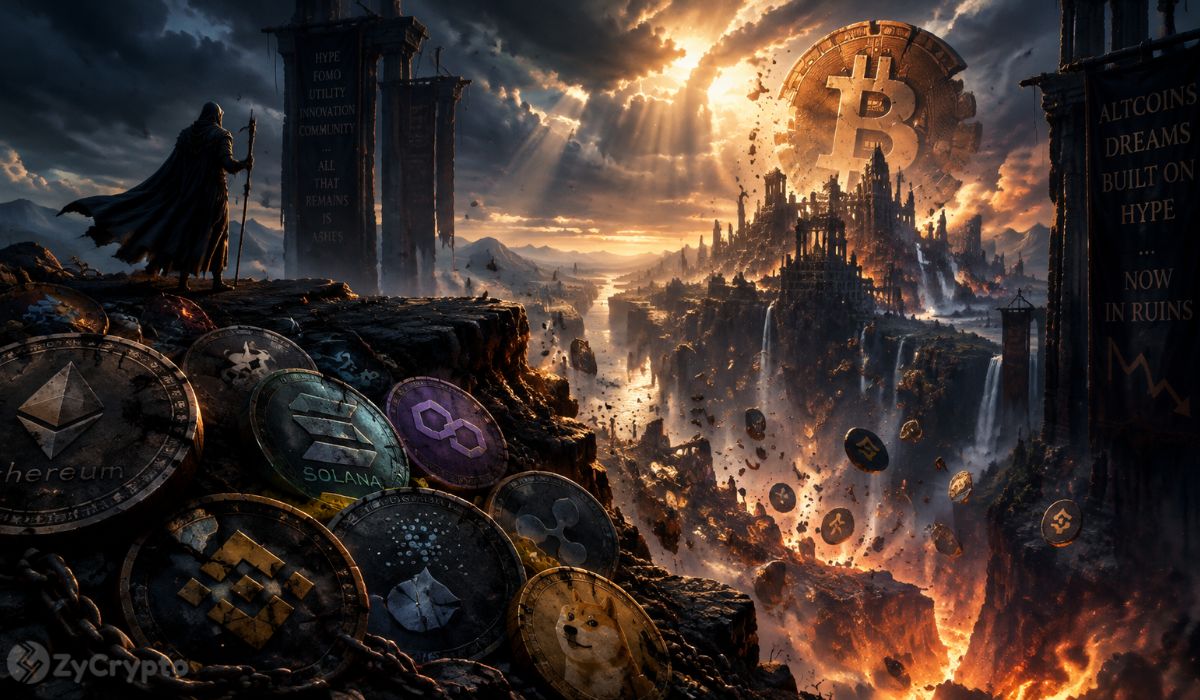
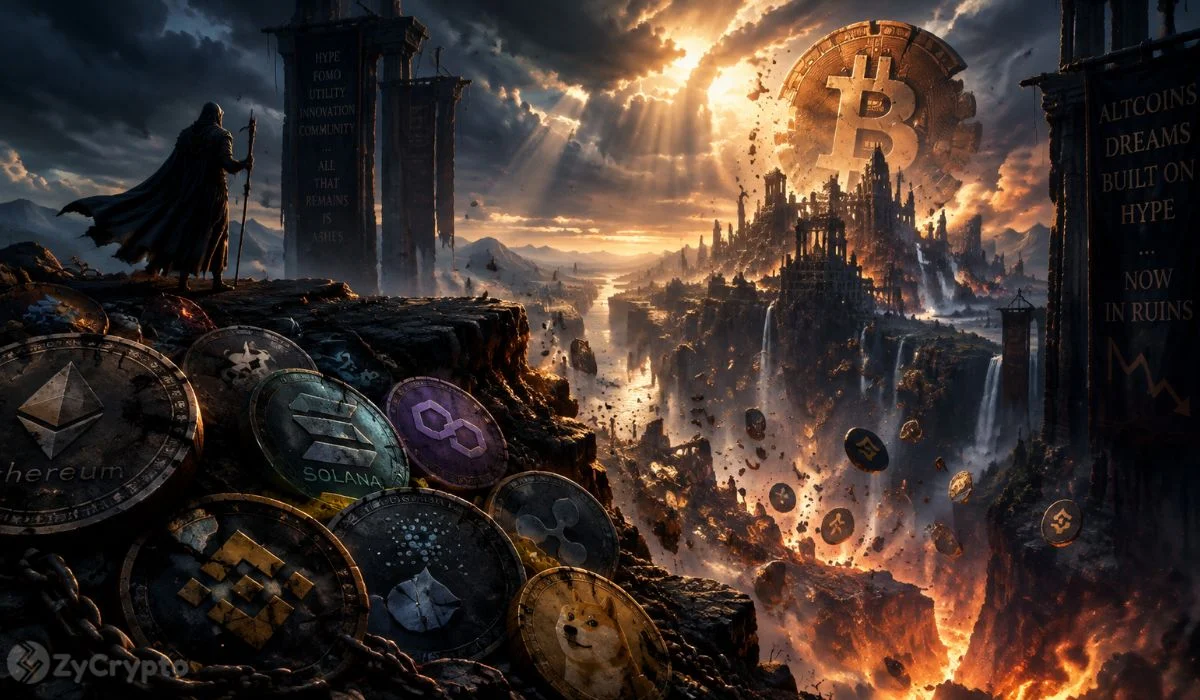
Tim Draper thinks the altcoin era may end the way many software markets did: the biggest platform absorbs the best ideas. In his view, Bitcoin won't need to beat XRP, Dogecoin or Solana at their own games. It just needs to take what works. Most debate about altcoins treats them as rivals that either win or fade. Draper is suggesting a third outcome, where they survive mainly as suppliers of ideas to one dominant network.
Microsoft as the Blueprint
Draper's model is Microsoft. He argues the company rarely won by inventing the most popular applications. It won by folding successful ideas into a larger ecosystem. That's a more useful lens than it first appears, because it moves the question from "who invented this" to "who controls the place where it ends up living."
His example is the spreadsheet and word processor market. Lotus 1-2-3 and WordPerfect proved demand existed, but Microsoft eventually shipped Excel and Word and built both into its operating system. It also acquired PowerPoint early and made it a core part of the productivity suite. The pioneers kept their users for a while, then slowly lost their edge. In software, that pattern is common. A product can be good and still lose once a rival controls where people already do their work.
Draper's post on X put it bluntly: "Altcoins are the Lotus 1-2-3s and WordPerfects of this era." The idea is that today's competing blockchains are running the experiments, and Bitcoin gets to adopt whatever survives. That's a sharp reframing. It turns the altcoin boom from a threat into a free research program. Here's the thing, though: experiments are only free for the platform that copies them. Someone else pays for the failures, and in crypto that someone is usually the people who bought into those tokens.
The obvious objection is that Bitcoin has never been known for rapid feature development. Draper's answer rests on network effects. A deeper ecosystem, more liquidity and more users can pull innovation toward the center even if the core chain moves slowly. Whether that pull is strong enough is the real question. Network effects are real, but they cut both ways. The same dynamics that draw developers to the biggest platform can also lock in a slow one.
Bitcoin's Share as Evidence
Draper points to Bitcoin's share of the overall crypto market as proof the pull is already working. He recalled watching its dominance climb from roughly 40% to 50%, then to 61%. Despite thousands of competing tokens, Bitcoin has kept gaining ground. Those figures come from his recollection rather than a sourced time series, so treat them as a directional signal, not precise data.
"Bitcoin is that platform," Draper said, and he's clearly betting the rising share numbers back that up. The claim is more interesting than the headline suggests. Market share alone doesn't prove Bitcoin is absorbing technology. It only shows where money and attention have gone.
Still, rising dominance during a stretch of intense altcoin experimentation is exactly what Draper's thesis predicts. That's the part that gives his argument teeth. Whether the dominance reflects absorbed innovation or simply capital preferring the largest, most liquid asset is harder to settle. From the outside, both explanations look identical on a chart. That's a problem for anyone trying to prove or disprove the thesis with price data alone.
What It Means for XRP, Dogecoin and Solana
If Draper is right, three of the market's best-known altcoins face a tougher argument. Each has built a distinct identity. XRP is tied to cross-border payments and the ecosystem around the XRP Ledger. Dogecoin has moved from internet meme to one of the market's most recognizable assets, held together by a loyal community. Solana has become a major smart contract platform, drawing developers with high transaction speeds and relatively low fees, and hosting DeFi, NFTs, meme coins and tokenized real-world assets. Those identities are why the thesis is worth testing against these three specifically.
Here's the tension: those strengths are exactly what Draper says Bitcoin could eventually borrow. Payments rails, community-driven adoption and fast execution are features, and features can be copied. Similar systems typically find that copying a feature is far easier than copying the network of people who use it. Communities are harder to copy, which is why Dogecoin may be the most interesting case in this argument.
That said, Draper's thesis isn't a simple death sentence for these networks. His actual claim is narrower. The innovations they pioneer could boost Bitcoin rather than secure their own long-term dominance. That's a meaningful distinction, and it's easy to lose when the argument gets framed as a headline about doom. If you're following these projects, the more useful question is what they're building now, not whether they'll be absorbed someday.
What Happens Next
The thesis is more testable than most crypto predictions. If Bitcoin's ecosystem starts adopting features first proven on other chains, that shows up in concrete places: new protocol layers, developer tooling and applications built around ideas that started elsewhere. Those are observable events, not vibes. That's a better standard than share charts alone, and it's one Draper's argument will eventually have to meet.
Here's where I'm skeptical. The Microsoft analogy works best when one company controls the distribution, the standards and the default experience. Bitcoin's governance is far more diffuse, and its development process is deliberately conservative. That doesn't rule out absorption, but it does mean absorption would likely look slower and messier than the software precedent suggests. Not a clean takeover, exactly.
And yet the scenario Draper describes doesn't require anyone to lose outright. Altcoins could keep their users, their communities and their developers while still supplying ideas to a larger network. That's a quieter outcome than "doomed," and probably a more realistic one. Whether it's a good outcome depends on which side of the trade you're on, and that's a question the article can't answer for you.

Discussion
Sign in to join the discussion.