The Ownership Token Framework aims to clarify token ownership rights, making them explicit and verifiable to enhance their value as investable assets.
For tokens to gain traction as viable investments, one key element must be front and center: ownership.
Many ERC-20 tokens—whether described as utility, governance, or network tokens—function fundamentally as financial instruments. It’s becoming clear that viewing these assets through the lens of "Ownership Tokens" is essential. This perspective emphasizes the need for enforceable economic rights linked to token ownership.
Currently, the market’s reality reveals a stark truth: many tokens lack clear ownership rights and credible pathways to value. If founders fail to convincingly articulate why a token holds value, it hampers their ability to raise capital. As a result, top-tier projects often revert to traditional equity models, leaving investors wary.
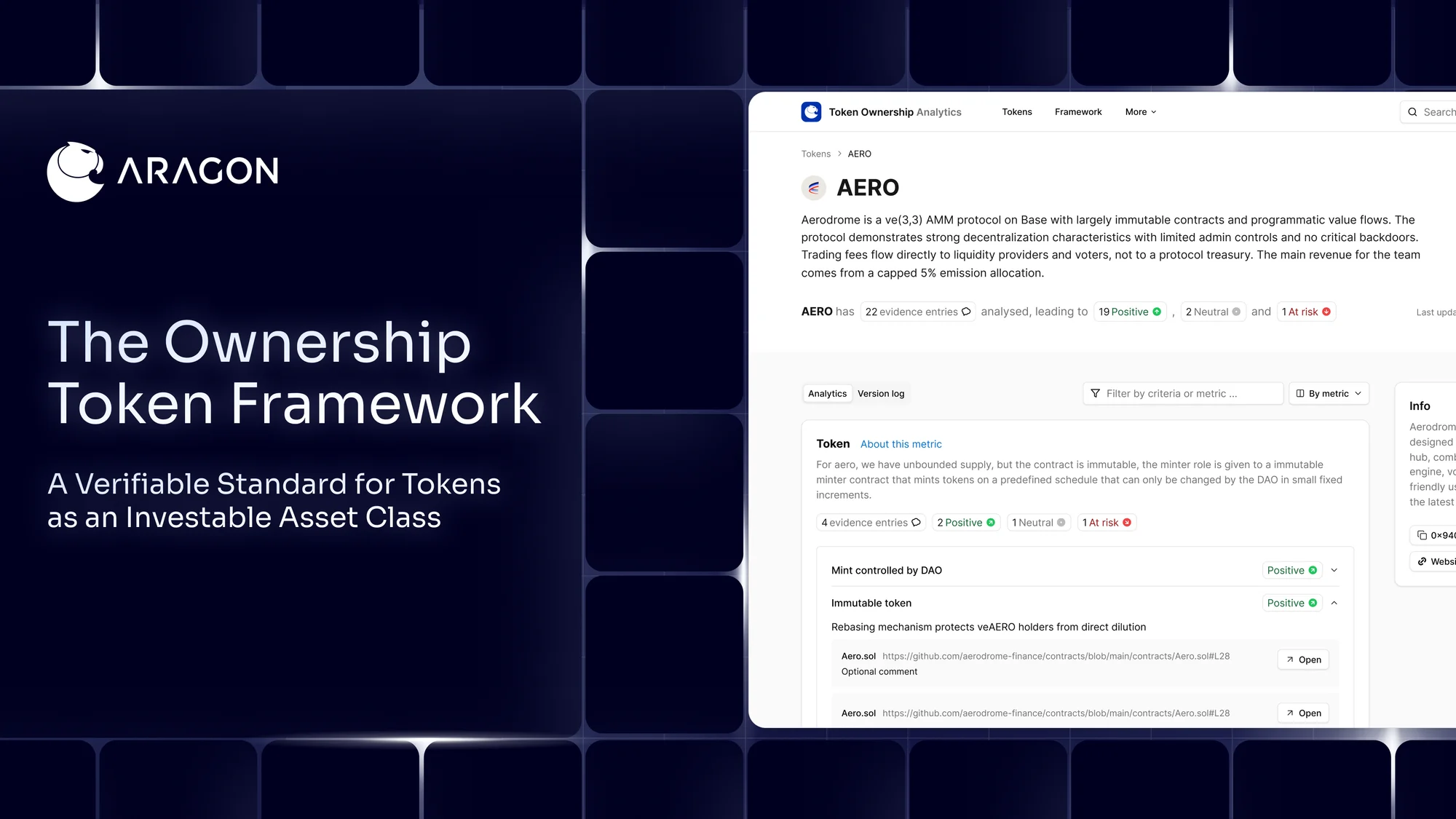
In response to these challenges, we are introducing the Ownership Token Framework. This initiative clarifies and standardizes token ownership rights, which is critical for making tokens visible as investable assets.
The Blocked Accrual of Value to Tokens
Historically, the structure of the market has impeded value from flowing to tokens. The challenges aren't rooted in technological limitations but rather in strategic choices made by teams under various pressures:
- Regulatory Skepticism: Founders often downplay explicit ownership rights to evade scrutiny, leading to a reliance on “governance utility” as a substitute.
- Lack of Claims: The typical scenario involves tokens that do not secure enforceable claims on assets or cash flows.
- Value Misalignment: Inequitable structures can pit token and equity values against each other, leading to distorted incentives among those managing valuable assets.
- Transparency Issues: The obfuscation surrounding token rights complicates due diligence, leaving investors in the dark regarding value generation and recourse if commitments are compromised.
This has created a market environment where tokens signal ownership, yet lack actionable rights that underpin real value.
The Perils of Unclear Ownership
When token ownership lacks clarity, economic control can easily slip into the hands of insiders or external parties, which invites exploitation. Unscrupulous actors operate within the grey zones created by vague rights and unclear structures, making it difficult for serious projects to establish credibility.
Additionally, well-intentioned projects suffer from off-chain value leaks through intermediaries and operational complexities. This raises critical questions about whether ownership lies with the organization or with the token holders, a distinction that can alter the investment landscape significantly.
The predictable outcome? Tokens without credible ownership indicators are discounted across the board, affecting not only the individual assets but also the market as a whole.
Defining Ownership Rights that Influence Token Value
Ownership plays a pivotal role in establishing a legitimate claim to assets and cash flows. For tokens to be recognized as investable, the rights of token holders must be intricately tied to the economic realities of the underlying systems. This translates to the need for enforceable rights regarding capital allocation, revenue distribution, and pivotal protocol decisions.
Tokens offer an underutilized advantage over traditional equity: ownership rights can be coded directly into the blockchain. When designed effectively, these rights become programmatic and verifiable, freeing themselves from reliance on managerial discretion. A significant reason many tokens remain undervalued is their failure to utilize this capability adequately.
The Ownership Token Framework concentrates on the economic rights that influence token-holder exposures directly. Instead of viewing governance as a catch-all for ownership, we dissect areas where enforceable rights dictate whether value can be accrued by token holders. Each category reflects a different aspect of rights over assets and the mechanisms that deliver value.
Our evaluative approach is focused on analyzing smart contract functionality:
- Identify relevant on-chain contracts
- Map permissions and control hierarchies: owners, administrators, roles, and execution capabilities
- Evaluate whether the rights are mutable or immutable (i.e., what authority exists for upgrades or changes)
- Inspect the logic governing value flows and routing mechanisms (including how value is distributed and potential barriers to misappropriation)
- Differentiate what exists within contracts versus what is actively practiced, referencing execution history as needed
Some critical components inevitably reside off-chain, including intellectual property, trademarks, and financial agreements. The legal framework surrounding these assets can either support or undermine tokenholder ownership, warranting a review alongside on-chain rights. In cases where off-chain assets exist, they can be held by a community-focused entity governed by trust-reducing constraints, thereby offering legal remedies against actions that could erode token value.
Introducing the Dashboard: A Tool for Investors and Founders
To enhance transparency and ownership visibility, a new interactive database—the dashboard—will make it easier to apply this framework consistently across various tokens. Designed to facilitate two main objectives:
- Accelerate Diligence for Investors: With enhanced clarity around ownership rights and value acquisition, investors can make more informed decisions. The dashboard standardizes evaluations of ownership claims through concrete on-chain and relevant off-chain evidence.
- Support Serious Projects with Verifiable Claims: Projects showcasing real ownership and robust value routing can distinguish themselves in the marketplace. Tokens exhibiting well-documented rights and mechanisms will hold greater allure for investors.
Leading protocols are stepping up to bolster enforceable rights and ensure transparent value routing for token holders. The implementation of the Ownership Token Framework will commence early next year, kicking off with pilot projects that demonstrate various approaches to enforceable rights.
Get Involved in Defining Ownership Standardization
We invite projects committed to establishing real tokenholder ownership to apply for inclusion in our initial cohort.
Being highlighted provides an opportunity to present a standardized, evidence-based profile for investors to conduct due diligence, detailing what tokenholders control, how value is accrued, and where this accountability can be verified on-chain.
Join us in setting higher standards for token investability by making ownership rights and value flows trustworthy, transparent, and comparably evaluated—enabling serious projects to stand out based on fundamental strengths.
Disclaimer: The dashboard acts as an informational resource designed to aid in due diligence and design processes. It does not constitute legal, financial, or investment advice.
Discussion
Sign in to join the discussion.