The future of governance in decentralized organizations leans towards automation, allowing for efficient policy execution without redundant proposals.
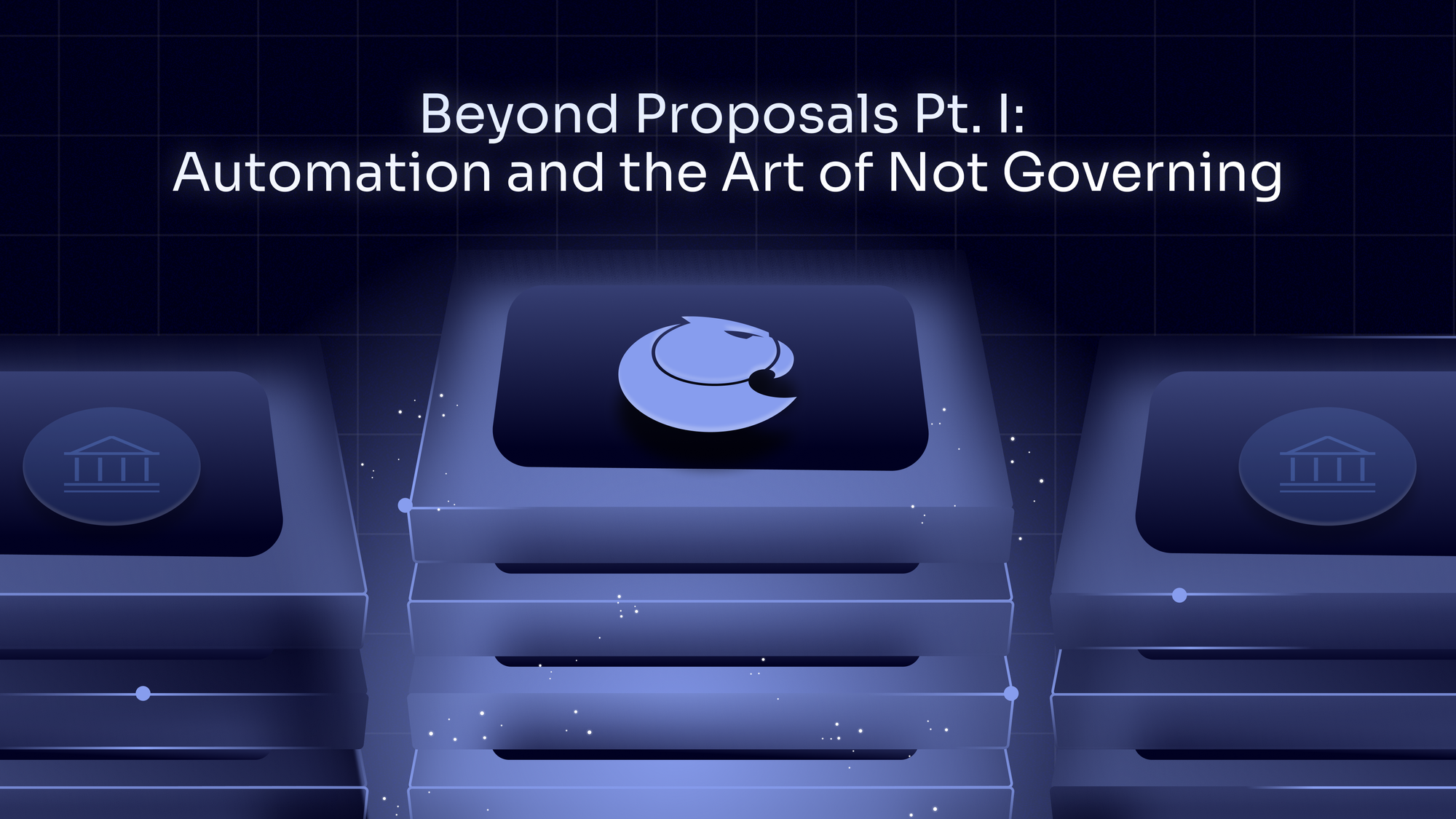
Decentralized organizations are evolving—transactions can now proceed according to established rules without the need for constant governance proposals.
The conversation around decentralized governance is reaching a pivotal moment, shifting away from rigid one-size-fits-all frameworks towards adaptable solutions that cater to specific operational needs. Last year, the team at Aragon asserted that the stagnant models of decentralized governance would lead to a halt in advancements unless they were transformed.
Historically, governance frameworks have relied heavily on proposals, turning every organizational action into what resembles an on-chain referendum. Stakeholder approval was needed for any transaction, requiring a quorum to assess and endorse actions before execution. This method is increasingly seen as inadequate for a host of routine tasks.
Consider how impractical it would be if an organization had to pass a proposal every time it paid bills or processed regular payroll. Such repetitiveness leads to unnecessary bureaucracy; it’s essential to reserve human judgment for decisions that warrant it—those moments when outcomes hang in the balance, or unclear intentions need to be articulated.
Operationally, organizations require consistent, structured, and predictable interactions. Consequently, identifying when human oversight is unnecessary while still allowing actions to be executed autonomously is the next frontier for on-chain organizations. By defining policies that govern repetitive transactions, these organizations can automate processes while eliminating the need for discretionary involvement from individuals or intermediaries.
Aragon is pioneering this evolution through the development of policy plugins. These plugins function similarly to existing governance plugins, regulating executable actions, but they operate without the need for human input during execution.
- Efficient Operations: This approach cultivates lean and transparent operations, with predictable capital allocations occurring according to established policies. Each transaction is executed based on defined rules, fostering trust through clarity and determinism.
- Strategic Decision-Making: While proposals will still have a place, relegated primarily to exceptional situations like protocol upgrades or unforeseen expenditures, the bulk of operational decisions will be devoid of repetitive evaluation around previously made choices.
The Shift Away from Proposal Governance
The architecture of on-chain organizations positions them as arbitrary executors, enabling them to interact with various smart contracts. This flexibility is advantageous but comes with a challenge: adequately expressing intent amidst the inconsistency of function call protocols across different systems.
To mitigate risks associated with arbitrary action execution, there must be a system in place to evaluate every proposal’s alignment with overall organizational goals and stakeholder preferences. Traditionally, this led to the creation of governance proposals to package actions with human-readable descriptions and allow stakeholders time to participate in voting.
However, as the volume of organizational activity surged, the human capacity for attention fell short. This disconnect creates an alignment issue, leaving founders of decentralized entities in a dilemma. Balancing between extending discretionary control to a broader base and the need for efficient decision-making is complex. In the current environment, where decentralized governance is becoming increasingly vital, the risk of token holder disengagement is significant.
Low engagement levels threaten the integrity of projects, leading to vulnerabilities that can be exploited by opportunistic entities leveraging convoluted initiatives. Solutions thus far have tended to exacerbate rather than resolve the problem, often leading to token voting being concentrated in the hands of a few, which dilutes genuine representation and risks entrenching power dynamics.
Policy as a Decision-Making Framework
Shifting to a model where governance is used judiciously—primarily for decisions that are novel and require continuous input—paves the way for better allocation of resources and governance focus. Every interaction does not demand fresh deliberation; as entities become more familiar with their operational routine, the scope for predictability expands.
In a blockchain context, what was once innovative evolves into standard practice over time. When transaction types are established and conditions predictable, it’s reasonable to codify these interactions into an organizational policy.
A policy creates a framework of rules for known and repeatable actions, allowing for seamless execution without renegotiation of stakeholder intent. Once a policy is set, it functions autonomously until there’s a need to amend it through governance discussions.
This approach represents an artful shift towards minimizing the need for governance, distilling decision-making to those instances requiring human nuance.
Understanding Policy Plugins
The newly proposed Aragon OSx features a neutral smart contract execution environment, where customizable plugins simplify governance processes. This design centers around a single smart contract account (DAO.sol), which executes a specified array of actions solely within the bounds of those instructions.
We categorize plugins into two distinct types:
- Governance Plugins: These cater to scenarios requiring proposals and stakeholder consensus, aggregating collective preferences into a unified decision.
- Policy Plugins: These serve operational needs where preferences are established and the task is merely to execute defined decisions.
The simplicity of policy plugins—focused on deterministic execution—lends itself to clarity in operational processes. Each policy plugin is charged with a singular function: to execute a specific class of action, to evaluate conditions, and apply those rules in a straightforward manner.
This enables unprecedented scalability and efficiency. For instance, consider a policy plugin designed to disburse a fixed monthly budget to designated team wallets; the criteria for disbursement can evolve through governance without overhauling the execution process.
The Timeliness of This Transition
As DeFi ecosystems and on-chain protocols mature, the heavily governance-reliant DAOs from yesteryears may no longer address contemporary challenges efficiently. While governance retains its significance, particularly concerning ownership rights, it must operate within a clearly defined scope of discretion, fostering automation in other domains.
Regulatory movements presently reinforce this notion, scrutinizing the delineation between discretionary control and codified, rule-based operational frameworks. The differentiation is notable, especially as the perspective shifts toward treating human intervention in financial decisions as a significant risk, while automated policy execution is deemed a dependable infrastructure.
In a world increasingly wary of arbitrary command over capital, automating financial policies via policy plugins is becoming essential. Much of the ongoing on-chain activity is inherently financial and increasingly fits into predictable patterns, making them suitable for automation.
Tokens without a tangible connection to the value their projects create inevitably face a decline, emphasizing the necessity for clearly defined and automated capital flows that clarify responsibilities for payment distribution. Once these financial operations are automated, governance can concentrate on more strategic aspects of organization health and policy evolution.
Part 2 of this exploration will delve into the mechanics of policy-driven capital allocation, outlining how organizations can implement these principles to optimize financial operations and stakeholder value distribution.

Discussion
Sign in to join the discussion.