Understanding Cross-Chain Solutions: Choosing the Right Tool for Your Application Needs
RELEASE Aug 19, 2026VIEWS 681DESK Soumyajit Chaudhuri
Identify and differentiate cross-chain solutions to meet your application's specific requirements and enhance user experiences effectively.
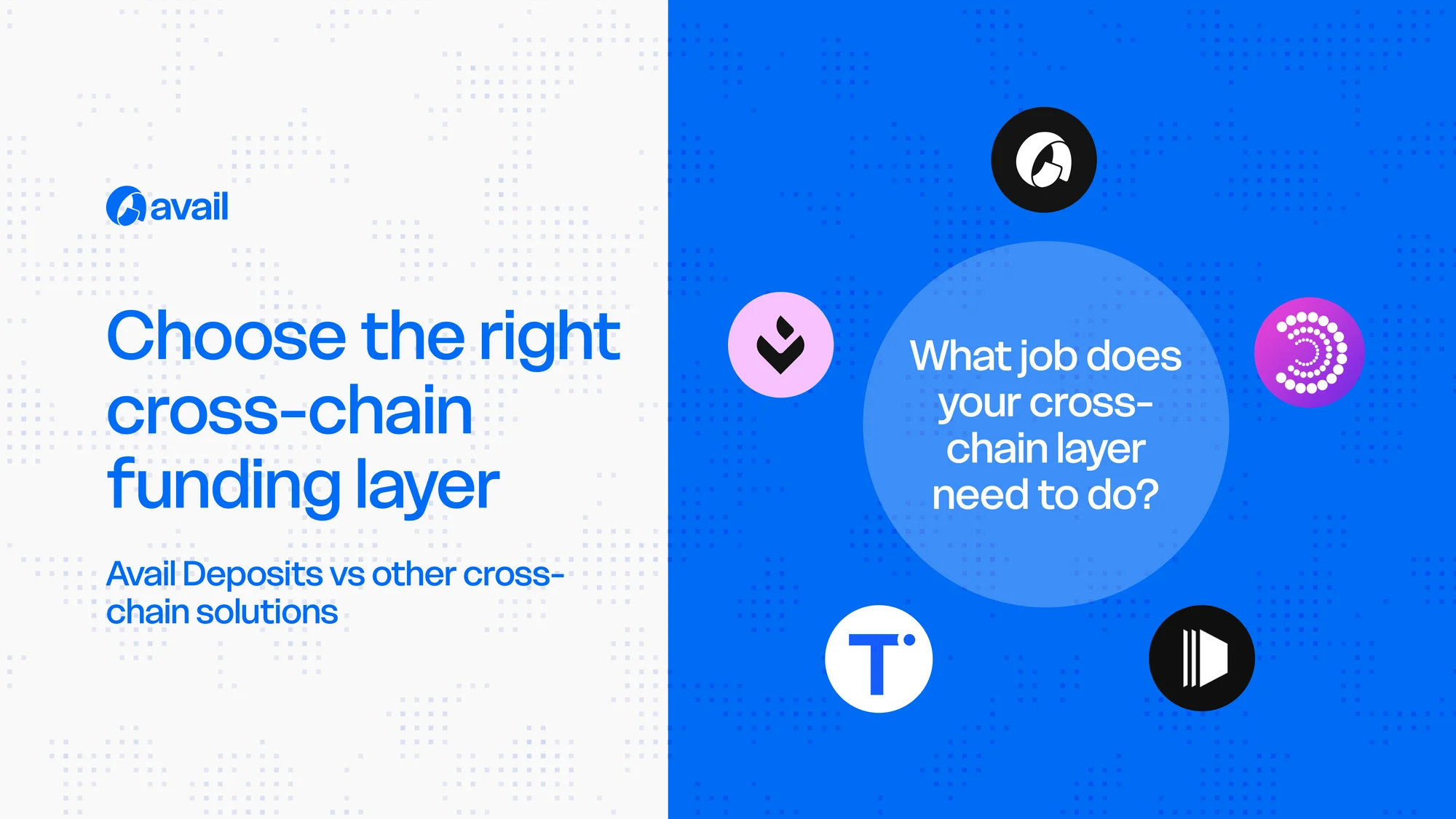
Cross-chain solutions often sound similar on the surface—terms like "one-click," "unified balance," and "gas abstraction" tend to saturate discussions. Unfortunately, this can mislead potential users into thinking these products are interchangeable. In reality, they can vary significantly in their architecture and intended use cases. Understanding those differences is crucial for choosing the right tool for a specific task.
At the heart of this discussion lies the distinction between different types of cross-chain functionalities. For example, a deposit product is designed to facilitate the funding of a predetermined destination. On the other hand, orchestration tools are geared toward interlinking multiple actions into a cohesive process, while routing layers assist applications in identifying viable liquidity paths. An account layer focuses on managing balances and transactions, whereas payment infrastructures aim to optimize transactions for use by merchants or in fintech environments.
To make the right choice, it's essential to start by clearly defining your application's needs. What outcome are you trying to achieve? By articulating the user’s expected result in a concise sentence—such as “A user should supply exactly 100 USDC to our lending market using available assets across supported chains without switching apps”—you reveal critical factors such as the fixed destination, required output, fragmented liquidity, and necessary next steps.
Once the core objective is clarified, you can differentiate between the types of solutions required. For instance:
- **Deposit:** Allocate funds to a specific app or contract.
- **Swap or Bridge:** Convert one asset to another or shift between chains.
- **Payment:** Enable users to use various assets while ensuring a defined settlement occurs.
- **Orchestration:** Combine multiple actions like transfers and swaps into one fluid process.
- **Account Abstraction:** Streamline identity and asset management at the account level.
It’s not unusual for a single application to need a blend of these functions. However, the key lies in identifying the most appropriate layer to integrate while providing a clear interface for users.
### Understanding Differentiation Among Solutions
What becomes evident here is that not all cross-chain solutions are built alike. Their capabilities don’t merely overlap; they serve different purposes and have unique strengths. Drawing clear distinctions between these options requires assessing how they perform under various user scenarios and failure conditions.
For decision-makers in this space, understanding these nuances isn't merely academic; it's a roadmap to fulfilling user expectations effectively. Relying on generalized feature lists can obscure the distinctive advantages of each tool. Before settling on a vendor, you need to match the technical capabilities of each solution against the specific outcomes your application demands.
This level of scrutiny is vital, particularly because providers often rely on general appeal in their marketing, masking the complexities that exist beneath the surface. As a result, it's imperative that you evaluate not just how these products communicate their offerings but how well they perform in real-world scenarios.
In sum, the path to successful implementation lies in thorough and context-driven analysis. Taking the time to dissect your application's needs and match them with the right cross-chain solution could very well be what stands between a successful deployment and a cumbersome user experience.
LI.FI operates as a versatile routing and execution layer, consolidating services from various bridges, exchanges, and solvers. Through its Widget, JavaScript or TypeScript SDK, and REST API, it allows developers to manage their integration options extensively. Integrators have the capability to allow or disallow specific providers, set limitations on chains and tokens, pre-select source and destination values, prioritize routes, and enable only qualified relayer paths.
This functionality positions LI.FI as a prime choice for wallets, exchanges, and multifaceted swap or bridge interfaces, especially where provider selection and route coverage are paramount. Its routing architecture initiates with a defined source chain, token, and amount and can accommodate multiple sequential steps within a single route.
Interestingly, the relationship between LI.FI and other aggregators is not always competitive. For instance, Avail’s integration with its documented swap pipeline allows it to solicit quotes from various sources, including LI.FI, Bebop, and 0x. This means that a routing provider can function as an underlying component to an app’s funding interface, rather than acting as a full replacement.
As we conclude this discussion, it's apparent that the dynamics of operational efficiency are more intricate than they first seem. The protocol for recording vital operational metrics—ranging from user effort to the nitty-gritty of developer responsibilities—illustrates how many moving parts are in play. If you’re in charge of managing these processes, consider this: understanding and regulating each variable could significantly boost performance and user satisfaction.
But let’s acknowledge the complexity. You're not just monitoring outputs; you're also managing inputs like latency, source costs, and user interactions. Each of these elements carries weight in the grand scheme, influencing everything from transaction speed to user experience. The implications here are substantial; every piece of data gathered, whether it's about execution times or failure states, contributes to a clearer picture of operational health. Ignoring any aspect could lead to inefficiencies that are easy to overlook but hard to rectify.
Which leads us to the pressing question: how do organizations adapt as these aspects evolve? Future-focused companies might invest in analytics to continuously optimize these variables, ensuring their operations keep pace with ever-changing demands. This isn't merely about troubleshooting anymore; it's about proactively managing a framework that allows for sustained growth and resilience.
Ultimately, as technology continues to transform how businesses operate, your ability to capture and analyze these metrics will define not just efficiency, but also the success of your operations. Stay vigilant—consider where you might enhance your systems today as they will dictate your readiness for the challenges of tomorrow.

Discussion
Sign in to join the discussion.